


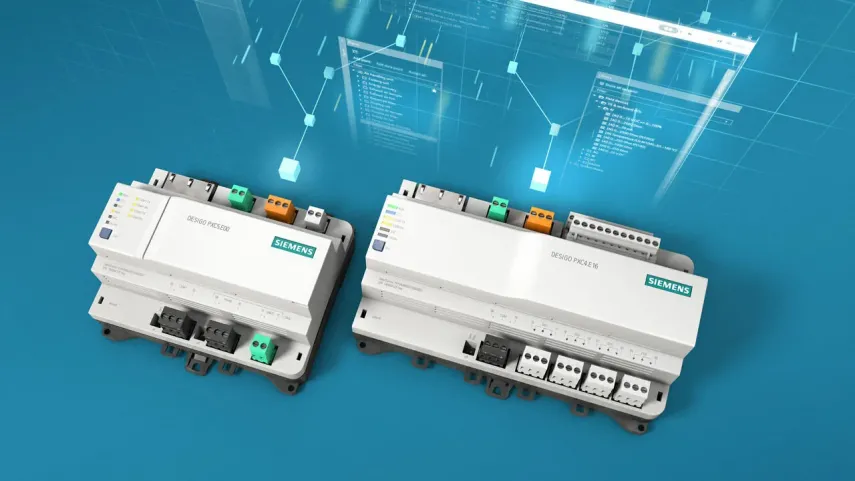
Siemens Building Automation is a building management solution that enables systems such as heating, cooling, ventilation, lighting and energy management to be centrally monitored, controlled and automatically managed according to needs. Thanks to building automation, data collected from different mechanical and electrical systems can be evaluated within a single management infrastructure.
Building automation systems, used especially in commercial buildings, offices, hospitals, hotels, shopping malls, industrial facilities and large-scale structures, help increase energy efficiency, maintain user comfort and carry out operational processes in a more controlled manner.
Within Siemens’ building management solutions, the BMS (Building Management System) approach holds an important place. Through this structure, information coming from different systems in the building can be tracked via a central platform, and automatic control can be provided according to defined operating scenarios.
As Dijinet, we provide support in evaluating Siemens building automation solutions in a way suitable for the project and the needs of the structure. To get information about the right solution for your project, you can contact us.
How Does Siemens Building Automation Work?
Siemens Building Automation functions through the joint operation of sensors, field devices, controllers, communication infrastructure and central management software.
The system’s operating logic is fundamentally based on collecting data from the building, evaluating this data, and automatically controlling the necessary systems.
For example, temperature sensors in a building can measure the ambient temperature and transmit this information to the control system. The controller can change the operating status of heating or cooling equipment in line with the defined operating values. Similarly, different parameters such as the occupancy status of the environment, air quality or lighting level can also be evaluated within automation scenarios.
This process is not merely a matter of turning a single device on or off. Building automation enables data from different systems to be evaluated together and actions to be taken according to predefined scenarios.
The Role of Sensors in Siemens Building Automation
Sensors are the fundamental components that enable the automation system to collect data from the field. Depending on the project, different parameters such as temperature, humidity, CO₂ and air quality, illumination level, pressure, energy consumption, occupancy and usage status can be monitored.
The collected data is transferred to controllers or the building management software. In this way, the system helps generate operating decisions according to the building’s current conditions.
Which Systems Does Siemens Building Automation Cover?
Building automation refers to the joint management of many different building systems that can communicate with each other, rather than a single system. The main areas in which Siemens building automation solutions can be used are as follows:
Heating, Cooling and Ventilation Systems
HVAC systems are one of the most important application areas of building automation. By evaluating data such as temperature, humidity, air quality and operating schedules, the operating conditions of heating, cooling and ventilation equipment can be managed. This approach helps both to maintain user comfort and to prevent equipment from operating unnecessarily.
Lighting Control
Lighting systems can also be included in the building automation infrastructure. Using information such as time schedules, occupancy status of the environment and illumination level, the operation of the lighting can be controlled. This helps prevent unnecessary lighting in unused areas and contributes to more controlled management of energy consumption.
Energy Management
One of the important purposes of building automation is to make energy usage monitorable and manageable. By tracking data related to electricity and other energy consumption, consumption trends can be evaluated. This data helps identify areas with high consumption or inefficient operating scenarios.
Fire Detection and Security Systems
Certain integrations can be established between building automation and fire detection, security and other building systems. The important point here is that the fire detection and alarm system has security functions independent of the building automation. Building automation can monitor status information coming from the fire system through appropriate integrations and provide coordination with other building systems according to the scenarios defined in the project.
For example, depending on the fire scenario, operations such as switching ventilation systems to certain operating states, or activating scenarios related to elevators or access systems, can be carried out according to the project design and the characteristics of the relevant systems. To get detailed information about Dijinet’s Siemens fire detection and alarm system solutions, you can review our relevant product and solution pages.
CCTV and Security Systems
Information obtained from CCTV, access control and other security systems can be made monitorable within central building management through appropriate integration infrastructures. This makes it easier for building managers to track different systems within a single management approach.
Water Management and Other Building Systems
Depending on the scope of the project, water systems, pumps, energy metering devices and various mechanical-electrical equipment can also be included in the building automation infrastructure. The main purpose here is to enable information from different systems in the building to be centrally monitored and the necessary control scenarios to be created.
What Are the Basic Components of Siemens Building Automation Systems?
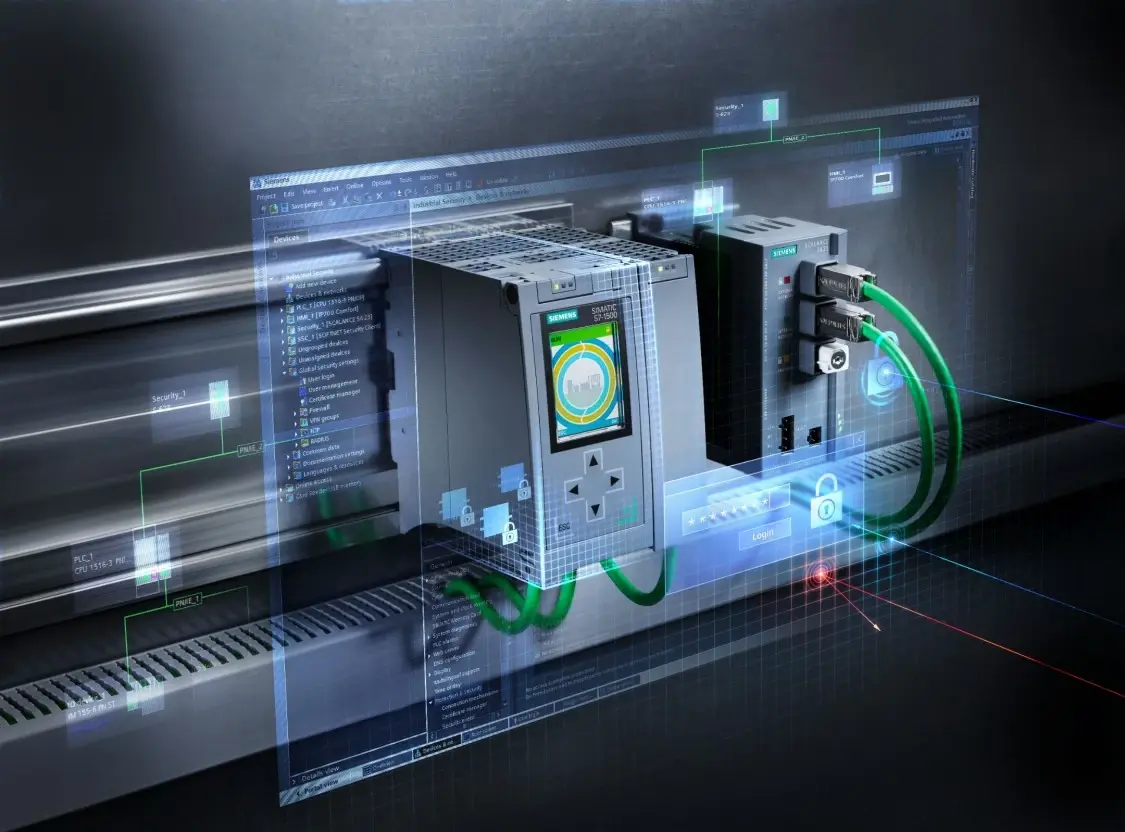
The operating structure of a building automation system does not consist only of central software. Many components, from field devices to communication infrastructure, work together. The main components are as follows:
- Sensors: Measure parameters such as temperature, humidity, air quality, illumination level and similar in the environment.
- Controllers: Evaluate information coming from sensors and field devices to enable the control of the relevant equipment.
- Field devices: Can take part in controlling equipment such as valves, dampers, fans, pumps and similar.
- Communication infrastructure: Enables different devices and systems to exchange data with each other.
- Central management software: Used for operations such as monitoring and controlling systems, tracking alarm and status information, and reporting.
Thanks to these components working together, building managers not only see the current status of the devices but can also evaluate the operating performance of the systems more comprehensively.
Siemens Building Automation Products and Platforms
Siemens building automation is structured with different products and platforms according to the size of the building, the number of systems and the integration need. The prominent solution family is broadly as follows:
- Desigo CC: A central building management platform for monitoring and managing different building systems (automation, energy, security, fire) from a single interface. It is particularly suitable for multi-system, large and complex structures.
- Desigo PX / PXC automation stations: DDC (direct digital control) stations that undertake measurement and control at the field level. They run the control scenarios of HVAC and mechanical equipment.
- Desigo Control Point: A web-based operator interface and management solution for medium-scale structures. It provides monitoring and control capability in more compact installations.
- Synco: A product offering HVAC controllers and monitoring solutions for small and medium-sized buildings; it can also be used in remote monitoring scenarios.
- GAMMA (KNX): A KNX-based solution family used in applications such as room automation, lighting and shading (blind/curtain) control.
Which product and platform to use should be determined by evaluating together the size of the building, the scope of the systems to be controlled, integration needs and project requirements. For product selection suitable for your project, you can contact Dijinet.
What Are the Advantages of Siemens Building Automation?
Siemens Building Automation, with a properly designed system commissioned in a way suitable for the project, can provide various advantages to building operation.
- Energy Efficiency: Monitoring and controlling the operating conditions of energy-intensive systems such as heating, cooling, ventilation and lighting helps reduce unnecessary energy use.
- User Comfort: The ability to control ambient conditions such as temperature, air quality, humidity and lighting creates more balanced and comfortable working conditions.
- Central Management: The ability to monitor different systems from a single management infrastructure makes it easier for operating personnel to track the systems.
- Fault and Alarm Tracking: Central tracking of alarm and status information helps unusual situations to be noticed more quickly.
- Operational Efficiency: Thanks to automatic operating scenarios and central monitoring, routine control processes can be made more organized.
- Tracking of Maintenance Processes: Monitoring operating states and alarm information helps equipment requiring maintenance to be noticed earlier, making planned maintenance possible.
- Reduction of Personnel Errors: Carrying out routine operations with automatic scenarios helps reduce human-caused errors and workforce burden.
- Gradual Startup After Outage: Gradually starting up devices that draw high current after a power outage helps prevent sudden overloading.
- Rapid Warning in Emergencies: In situations such as fire, disaster or security breach, relevant scenarios are activated, contributing to faster notification of people inside the building and to evacuation (provided that the independent security functions of fire detection remain reserved).
Does Siemens Building Automation Provide Energy Savings?
The contribution of building automation systems to energy consumption depends not only on automation being installed, but on how the system is designed, commissioned and operated.
For example, unnecessary air conditioning or lighting of an area outside working hours can be prevented. Similarly, the operating conditions of HVAC systems can be optimized by taking into account data such as temperature and air quality. Regular tracking of energy consumption information helps understand in which parts of the building higher consumption occurs.
For this reason, building automation should be evaluated as a management infrastructure that enables energy usage to be measured, monitored and controlled, rather than as a standalone device that provides energy savings on its own.
In Which Buildings Is Siemens Building Automation Used?
Building automation can offer significant advantages especially in structures where many mechanical and electrical systems operate together. Areas of use may include offices and business centers, hospitals, hotels, shopping malls, universities and educational buildings, industrial facilities, public buildings, large commercial structures and mixed-use projects. As the size of the project increases, monitoring and managing different systems from a single center becomes more important.
How Does Building Management Become More Efficient with Siemens Building Automation?
In traditional building management, tracking different systems separately can increase the workload of operating personnel. Building automation, on the other hand, enables these systems to be monitored under a common management approach. For example, a building manager can track the operating status of HVAC systems, temperature values, energy consumption, lighting status, alarm information and the operating states of equipment through a central interface.
Thus, not only instant control, but also the examination of historical data and making operational decisions based on this data becomes possible.
How Is a Siemens Building Automation Project Implemented?
Building automation projects are generally carried out as a process that begins with survey and needs analysis and continues with commissioning and service. The typical stages can be summarized as follows:
- Needs analysis and survey: The existing mechanical/electrical infrastructure and the systems to be controlled are examined, and the required automation scope is determined.
- Integration plan: The need and degree of integration with systems such as CCTV, fire detection, access control and elevators is defined.
- Scenario design: Operating scenarios and automation rules are created specifically for the project.
- Product and system selection: Controllers, field devices and management platform suitable for the scale are determined; expansion needs are taken into account.
- Implementation and commissioning: Engineering, programming, field installation and commissioning work is carried out.
- Training and service: Operator training is provided; after the system becomes operational, maintenance and technical service processes are planned.
What Should Be Considered in a Siemens Building Automation Project?
In building automation, determining the system to be used based solely on product selection is not sufficient. The mechanical and electrical infrastructure of the project, the building’s purpose of use, the equipment to be controlled and future expansion needs should be evaluated together. During project design, it is particularly important to determine the systems to be controlled, the selection of field devices, sensor placements, the creation of control scenarios, the planning of communication infrastructure, the design of central management screens, the determination of alarm and reporting needs, and the evaluation of integrations with other building systems.
For this reason, in building automation projects, correct engineering, project design and commissioning processes are as important as the correct product.
Frequently Asked Questions About Siemens Building Automation
What is Siemens Building Automation?
It is an automation infrastructure that enables the monitoring and control of a building’s heating, cooling, ventilation, lighting, energy management and — through appropriate integrations — other building systems.
What does Siemens BMS mean?
It is the abbreviation of the phrase “Building Management System.” It means Building Management System and refers to the central monitoring and management of different systems in the building.
What are Siemens building automation products?
Prominent solutions include the central management platform Desigo CC, Desigo PX/PXC automation stations, Desigo Control Point for medium scale, Synco for HVAC, and the KNX-based GAMMA. Product selection is determined according to the project.
What is Desigo CC?
It is a central building management platform for monitoring and managing different building systems (automation, energy, security, fire) from a single interface, particularly suitable for large and multi-system structures.
Are Siemens building automation and Siemens industrial automation (SIMATIC) the same thing?
No. Building automation manages the HVAC, lighting and energy systems of buildings with solutions such as Desigo, Synco and GAMMA. Products such as SIMATIC/SINUMERIK, on the other hand, are aimed at industrial/production automation; they address different needs.
Does Siemens Building Automation provide energy savings?
When properly designed and operated, it can contribute to energy efficiency by helping HVAC, lighting and other energy-consuming systems operate according to needs.
Does Siemens Building Automation manage the fire system?
The fire detection and alarm system operates within its own security functions. However, with appropriate integrations, information from the fire system can be monitored in building automation, and coordination with other systems can be provided according to the scenarios defined in the project.
Which systems can Siemens building automation integrate with?
Depending on the characteristics of the project, integration options with HVAC, lighting, energy monitoring, security, CCTV, access control, fire detection and various mechanical-electrical systems can be evaluated.
Which buildings is Siemens Building Automation suitable for?
It can be used in offices, hospitals, hotels, shopping malls, industrial facilities, educational buildings and large-scale structures where central management of numerous systems is required.
Secure Your Siemens Building Automation System
| Manage your building’s HVAC, lighting, energy and integrated systems from a single center with Siemens building automation solutions, backed by Dijinet’s engineering expertise. Contact us for project evaluation and a tailored solution. → Siemens Fire Detection and Alarm Systems (products and solutions) Phone: +90 312 473 23 65 | WhatsApp: +90 549 423 42 00 | E-mail: info@dijinet.com.tr | ‘Get a Project Quote’ form | Ankara and all of Türkiye |