


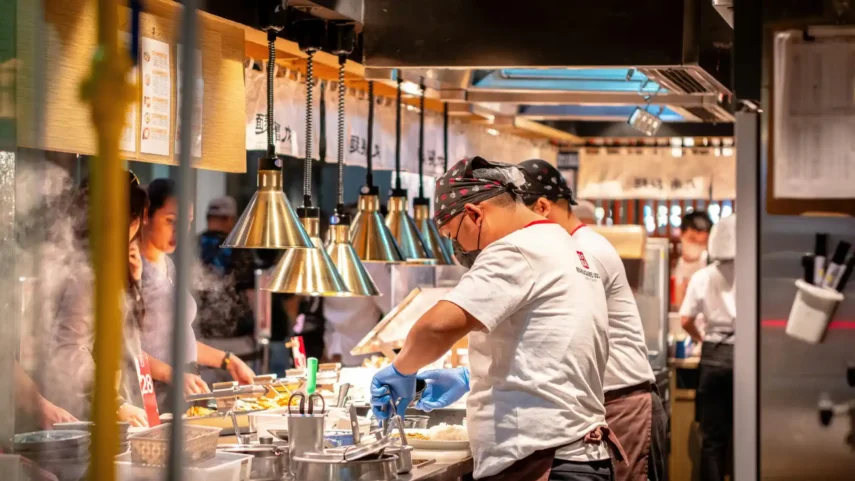
Restaurants are among the businesses with the highest fire risk in a building. Open flame, hot oil, high temperature, LPG or natural gas, and intensive electricity usage; all are present in one space, amidst crowded customers. Statistics show that the vast majority of restaurant fires start in the kitchen.
As Dijinet, we design fire detection solutions for restaurants and cafes that are tailored to the unique risks of these establishments. On this page, we address the fire risks that distinguish restaurants from other structures, why the kitchen needs special consideration, and how to configure the correct detection system.
What Makes a Restaurant Special from a Fire Safety Perspective?
- Kitchen = highest risk: Open flame, hot oil, and high temperature together; grease fires spread very quickly.
- Steam, soot, and grease vapor: These factors mislead standard smoke detectors, leading to continuous false alarms.
- LPG / natural gas usage: Gas leaks pose an explosion/poisoning risk independent of fire and must be monitored separately.
- Crowd and evacuation difficulty: Most customers are unfamiliar with the space and exits; fast and clear warning is essential.
- Different risks for dining area and kitchen: Slow-developing smoky fire in the dining area, rapid heat increase in the kitchen; both require different detectors.
- Continuous operation: Evacuation is much more difficult during peak hours; early detection is vital.
Kitchen: Why Heat Detector, Not Smoke Detector?
The heart of restaurant fire detection is the kitchen, and the most important rule here is this: standard optical smoke detectors are not used in the kitchen. This is because steam, soot, and grease vapor produced during cooking trigger the smoke detector as if there were a real fire. The result: false alarms throughout the day and a system that is eventually disabled.
Instead, a heat detector is used in the kitchen. A heat detector is affected by a rise in temperature, not smoke; it alarms when a certain threshold is exceeded or in the event of a sudden temperature increase. Thus, it detects the heat of a real fire without being affected by normal cooking steam.
| Brief rule: Kitchen → heat detector. Living room, entrance, corridor, storage → optical smoke detector. Each area is protected with a device suitable for its risk. |
For details on selecting detector types according to the environment:
Integration of Hood Suppression System with Detection
In commercial kitchens, the hood above stoves and fryers is protected against oil fires by a wet chemical extinguishing system. This system automatically activates when its heat-sensitive detection element exceeds a certain temperature, sprays the extinguishing agent, and cuts off the gas/electrical supply.
The critical point here is that this extinguishing system should not operate in isolation. When the hood system activates, this information must be transmitted to the main fire detection panel. Therefore:
- Central notification: When suppression is triggered, the panel alerts, and personnel and, if necessary, the fire department are informed.
- Logging and monitoring: The event is recorded on the panel; it is known at which point and when it was activated.
- Scenario coordination: Scenarios such as ventilation shutdown and alarming are coordinated along with suppression.
This integration can be robustly established, especially in addressable systems; the status of the extinguishing system is monitored from the panel. For the installation of the extinguishing system itself, relevant extinguishing companies are engaged; we undertake the detection and integration side.
A Real Scenario: 11:45 PM, Start of an Oil Fire in a Restaurant Kitchen
The restaurant is closed, there is only one cleaning staff in the hall. A small flame forms in accumulated grease under a malfunctioning equipment in the kitchen. The response of a properly designed fire detection system would be as follows:
| Duration | System Response |
|---|---|
| 0–3 sec | The heat detector in the kitchen detects a sudden temperature increase. The signal is immediately transmitted to the addressable panel; the panel indicates exactly which device it is. |
| 3–8 sec | The panel waits for double verification (coincidence) to prevent false alarms. When the second detection confirmation arrives, the general alarm is activated. |
| 8–15 sec | Sirens and flashers in the kitchen and hall areas are activated. The system clearly indicates on the panel that the event originated from the kitchen area. |
| 12–20 sec | The hood extinguishing system (if present) automatically activates, and this information is transmitted to the panel. Kitchen electricity and gas supply are automatically cut off. |
| 15–30 sec | The kitchen ventilation damper closes; the spread of smoke to the hall and neighboring sections is limited. |
| 20–45 sec | The voice announcement system (if integrated) provides a guiding warning only in the relevant area: personnel are asked to proceed to the nearest exit. |
| 30–60 sec | Emergency exit doors are released. If present, the automatic telephone dialer informs the fire department. The authorized person monitoring the panel instantly sees the exact location of the event. |
| 1–5 min | The event is brought under local control. A small start is contained without spreading outside the kitchen. |
The key to this scenario is: A properly designed system executes dozens of actions simultaneously and in the correct area, without human intervention. The fire is contained where it started, the rest of the establishment and neighboring sections are protected, and material and business losses are minimized.
How Would the Same Scenario Unfold with an Inadequate System?
- In a conventional panel: The system only shows “kitchen area alarm”; it cannot specify which device. Finding the source in a large kitchen takes time.
- If there’s no integration: Even if the hood extinguishing system activates, the panel remains unaware; electricity/gas is not automatically cut off.
- If the wrong detector is used: A smoke detector placed in the kitchen might have already been disabled for months because it gave false alarms — meaning it’s silent exactly when needed.
- If there is no announcement and damper integration: Smoke spreads to the dining area, and communication becomes chaotic.
Consequently, a small grease fire that could be contained in a few minutes with the right system can turn into a disaster that shuts down the entire kitchen and operation with an inadequate system. The difference lies not only in the equipment itself but also in the system being correctly designed and properly integrated.
Gas (LPG / Natural Gas) Detection in the Kitchen
Most restaurant kitchens use LPG or natural gas. Independent of fire, a gas leak poses both explosion and poisoning risks. Therefore, gas detection in the kitchen is a separate layer that complements fire detection.
- Natural gas (methane) is lighter than air: The detector is positioned near the ceiling.
- LPG is heavier than air: The detector is positioned near the floor (a common placement error).
- Automatic gas shut-off: When a leak is detected, the solenoid valve automatically cuts off the gas and gives an alarm.
Dining Area, Storage, and Other Sections
A restaurant is not just made up of its kitchen; every section has its own risk:
| Area | Risk | Recommended Detection |
| Kitchen | Grease, flame, high heat | Heat detector + hood integration |
| Dining area / seating area | Slow-developing smoky fire | Optical smoke detector |
| Storage / pantry | High fire load (packaging) | Optical smoke detector |
| Electrical panel | Cable fire | Optical smoke detector |
| Boiler / water heater area | Heat, gas | Heat detector + gas detection |
| Escape routes / exit | Evacuation | Call point, siren, strobe light |
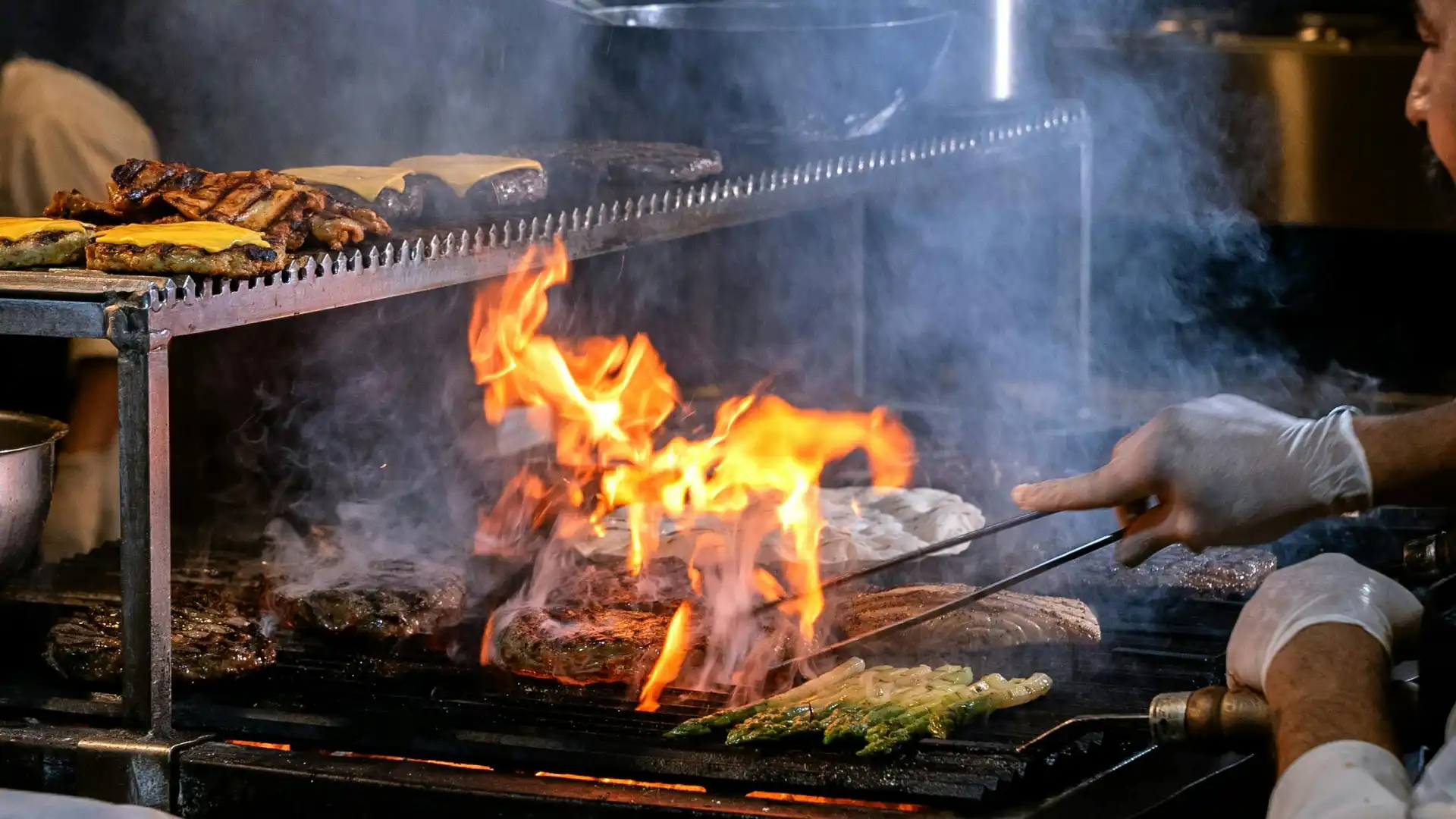
Is a Fire System Legally Mandatory in Restaurants?
Yes. The Regulation on Fire Protection of Buildings (BYKHY) and occupational health and safety legislation mandate fire detection systems for restaurants of certain sizes and capacities. Additionally, an automatic hood suppression system becomes mandatory for kitchens within shopping malls, restaurants in high-rise buildings, and businesses serving a large number of people at once.
These requirements are not only technical; they are also binding for workplace permits, fire department compliance, and insurance processes. A restaurant cannot legally operate without a fire system.
Restaurants within Shopping Malls and Hotels
A restaurant can be in an independent building, or it can be on the food floor of a shopping mall or within a hotel. In this case, the restaurant’s fire system must work integrated with the main building’s system. Our related sector pages:
Why Dijinet for Restaurant Projects?
- Accurate detection specific to the area: Heat in the kitchen, smoke in the dining area; the right setup that prevents false alarms.
- Hood and gas integration: Integration and monitoring of suppression and gas detection to the main panel.
- End-to-end service: Survey, project design, installation, commissioning, and maintenance from a single source.
- Team knowledgeable in regulations: Projects ready for approval for permit and fire department compliance.
Frequently Asked Questions
Which detector is used in a restaurant kitchen?
A heat detector is used in the kitchen. Smoke detectors are not used in kitchens because cooking steam, soot, and oil vapor constantly lead to false alarms with standard smoke detectors. In areas like the dining room and storage, optical smoke detectors are preferred.
Is a hood suppression system mandatory in restaurants?
An automatic hood suppression system is mandatory by regulation in commercial kitchens of a certain size and capacity (especially shopping mall kitchens, high-rise buildings, and high-capacity restaurants). The integration of this system with the main fire detection panel is also important.
How long does it take to install a restaurant fire detection system?
The duration depends on the size of the restaurant, the number of sections, and the type of system. The exact duration and scope are determined after an on-site inspection. We plan the installation to disrupt your operation as little as possible.
Can gas leaks in the kitchen also be detected?
Yes. A gas detection system is installed in kitchens using LPG or natural gas. For natural gas, the detector is positioned near the ceiling, and for LPG, near the floor; when a leak is detected, the gas is automatically cut off and an alarm is triggered.
Free On-Site Survey and Offer for Your Restaurant
| Custom Fire Detection Solution for Your Restaurant The correct detection solution varies depending on conditions such as your kitchen layout, dining area size, gas usage, and hood system. Our engineering team inspects your restaurant on-site and prepares a project and offer covering the kitchen, dining area, and integration. On-site survey and preliminary assessment are free.For current products and news, on our social media accounts you can follow us.Phone: +90 312 473 23 65 | WhatsApp: +90 549 423 42 00 Email: info@dijinet.com.tr | ‘Get Project Offer’ form | Ankara and all of Turkey |